Zivora: The Handwritten Brush Font That Adds Bold Personality to Real Projects
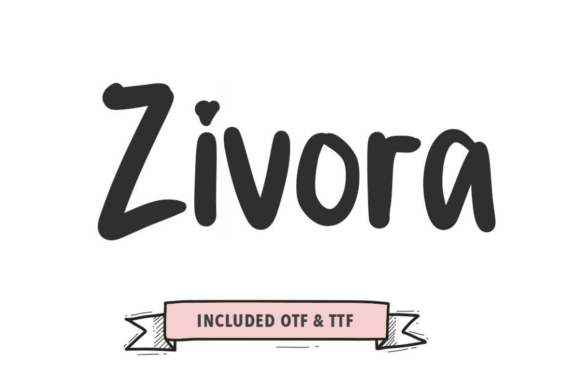
If you’ve ever stared at a flat, lifeless headline and wished it had more soul—more movement, more confidence, more *you*—then Zivora is the kind of font that changes how you approach design. It’s not just another script font downloaded from a free bundle. Zivora is a handwritten brush font crafted to feel bold, expressive, and effortlessly stylish—like someone with serious lettering skill sat down and painted each character with intention.
What makes Zivora stand out isn’t just its look—it’s how it behaves in real work. Each letter carries natural stroke variation, subtle texture, and dynamic flow. That means no robotic uniformity. No stiff curves or awkward joins. Instead, you get characters that breathe: thick downstrokes that ground your text, light upstrokes that lift it, and organic imperfections that whisper “handmade,” not “generated.”
When You Actually Reach for Zivora (Not Just Scroll Past It)
You don’t use Zivora for body copy. You reach for it when something needs to be seen, felt, and remembered. Think of it as your go-to voice for moments where tone matters as much as message.
A freelance graphic designer uses Zivora for a local bakery’s new logo lockup—not because it’s trendy, but because it mirrors the warmth of freshly baked sourdough and the care behind hand-iced cookies. The font doesn’t shout; it invites. And customers notice. One client told her, “It looks like *us*, not like a stock template.”
An educator building a workshop slide deck swaps their default sans-serif title font for Zivora on key takeaways. Suddenly, “Your First 30 Minutes Matter” feels less like a bullet point and more like a mentor leaning in. Students report remembering those slides better—not because the font is flashy, but because it signals intention and humanity.
A small business owner launching an Instagram campaign for handmade ceramics uses Zivora in carousel headers and story stickers. The texture echoes the raw clay surface of her mugs. Followers comment things like “This feels so real” and “I can almost feel the glaze”—a direct link between visual language and tactile authenticity.
Where Zivora Fits Without Feeling Forced
Zivora works best when contrast does the heavy lifting. Pair it with clean, neutral typefaces (like a sturdy sans-serif or even a soft serif) for balance. Use it for short, high-impact text: logos, headlines, quotes, product names, social banners, event posters, packaging accents, or even signature lines in email newsletters.
It shines in digital spaces where attention is scarce—like Instagram bios (“Hand-poured candles • Small-batch • Made in Portland”), Etsy shop banners, or Canva-designed Pinterest pins. But it also holds up beautifully in print: think wedding invitations with inked envelopes, boutique retail signage, or limited-run zine covers.
Here’s what users consistently tell us: Zivora doesn’t ask you to overthink. You don’t need advanced typography knowledge to use it well. If you can identify which words carry emotional weight in your sentence—“Celebrate,” “Grow,” “Create,” “Belong”—that’s where Zivora belongs.
Real Scenarios, Real Decisions
- Branding a side hustle? Try Zivora for your business name + tagline combo on a simple one-page site. Test it against your current font. Does it make your mission feel more grounded—or more distant? Most find it adds warmth without sacrificing professionalism.
- Designing a workshop handout? Use Zivora only for section headers—not every subhead. Let the rhythm guide you: if a heading has three words, try setting the first and last in Zivora, keeping the middle in a lighter weight of your base font. It creates visual breathing room.
- Creating social content for a nonprofit? Zivora helps humanize stats. Instead of “500+ families served,” try “500+ families served” with “served” in Zivora. The emphasis lands differently—not louder, but more personal.
- Building a mood board for a rebrand? Drop Zivora into your Figma or Adobe XD file early—even before color palettes are locked. Its texture often reveals whether your direction feels cohesive or cluttered.
What to Keep in Mind Before You Install or License
Zivora is expressive—but expression has limits. It’s not built for long paragraphs, legal disclaimers, or tiny mobile footers. If your project relies on readability at small sizes (<14px), or requires multilingual support beyond basic Latin characters, check the foundry’s specimen sheet first. Some versions include extended language sets; others focus tightly on English and Western European use.
Licensing matters too. If you’re using Zivora in client work—say, designing a Shopify store banner—you’ll likely need a commercial license. Many creators assume “free download = free to use anywhere,” but most reputable brush fonts like Zivora require clear permission for commercial redistribution. A quick glance at the license terms saves headaches later.
And while Zivora looks spontaneous, it rewards thoughtful application. Try testing it in grayscale first—does the contrast hold up? Does the texture read clearly on both light and dark backgrounds? One blogger discovered her Zivora quote graphics looked muddy on Instagram’s dark mode until she added a subtle white stroke—simple, effective, and rooted in observation, not guesswork.
Why It Sticks With People (Beyond the Aesthetic)
Zivora resonates because it meets a quiet need: the desire to communicate with presence. In a world saturated with algorithm-optimized templates and AI-generated visuals, choosing a font like Zivora is a small act of authorship. It says, “I made this choice. I meant for it to feel this way.”
That’s why teachers use it to welcome students back after break—not to impress, but to signal care. Why podcasters drop it into episode thumbnails—not for virality, but to reflect the honesty of their conversations. Why indie publishers use it on chapbook spines—not to chase trends, but to honor the physicality of the object in someone’s hands.
You don’t need to be a designer to benefit from Zivora. You just need to care about how your words land. Whether you're naming a new product, writing a heartfelt newsletter, or designing a birthday card for your niece—Zivora gives your message room to be both confident and kind, bold and human.